
What are you looking for

£21,000 Starter

Average salary (a year)

£45,000 Experienced

Average salary (a year)

36 to 38 a week

Typical hours (a week)

How to become

Explore the different ways to get into this job

You can get into this job through:

  • a university course
  • a college course
  • an apprenticeship
  • working towards this role
  • through certification with a professional body

University

You could do a degree or postgraduate course to become an information scientist. 

You can see approved courses and qualifications on the Chartered Institute of Library and Information Professionals (CILIP).

Courses include:

  • information studies
  • information management
  • informatics
  • data asset management
  • library studies

Entry to postgraduate courses is very competitive. Before you apply for a course, you should try to get up to a year's work experience in a library or information services setting.

Entry requirements

You'll usually need:

  • 2 to 3 A levels, or equivalent, for a degree
  • a degree in any subject for a postgraduate course
College

You could do a T Level in Management and Administration to get some of the skills and knowledge you'll need as an assistant information officer or information manager apprentice.

Entry requirements

You'll usually need:

  • 4 or 5 GCSEs at grades 9 to 4 (A* to C), or equivalent, including English and maths for a T Level

Apprenticeship

You could do an apprenticeship relevant to this role such as:

  • Library, Information and Archive Services Assistant Level 3 Intermediate Apprenticeship
  • Information Manager Level 4 Higher Apprenticeship
  • Archivist and Records Manager Level 7 Degree Apprenticeship

There might be opportunities to do an apprenticeship in different sectors like education, construction, engineering, health, transport or local government.

Entry requirements

To get onto an apprenticeship, you'll find it useful to have:

  • 5 GCSEs at grades 9 to 4 (A* to C), or equivalent, including English and maths, for an advanced apprenticeship
  • 4 or 5 GCSEs at grades 9 to 4 (A* to C) and A levels, or equivalent, for a higher or degree apprenticeship

Work

You could start as an assistant information officer or library assistant and work your way up by training on the job.

Other Routes

If you're already working in information science or management, you could get your skills and knowledge certified with professional registration from the Chartered Institute of Library and Information Professionals (CILIP).

Real career story

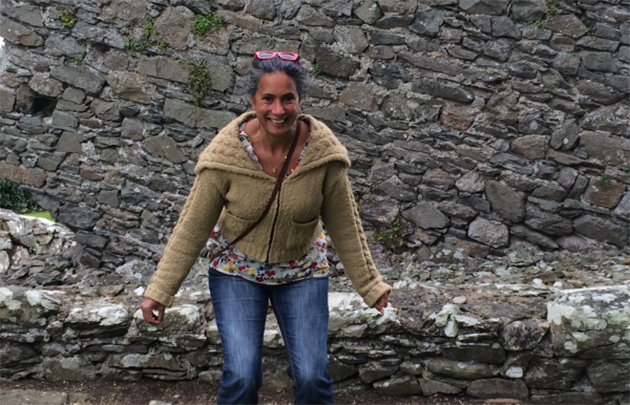
A woman crouching and smiling in front of a brick wall.

Business and finance degree

“My first degree was in business and finance, but while studying, I worked part time as a library assistant in the university library.”

Master’s and professional chartership

“When I graduated, the university library offered me a permanent position. They also offered to fund my master’s in library and information studies and my professional chartership.”

Medical librarian

“There was no career progression at the university, so I took up a role as a medical librarian in a psychiatric library. From there, I worked in primary and secondary health care institutions, and in medical university libraries. I worked on national projects, including a virtual health library.”

Doctorate and current role

“While I was working full time, I also completed my doctorate, which focused on improving access to high quality health information for the public. I am currently working for a national public health organisation, finding the evidence to support public health policy and guidance.”

What it takes

Find out what skills you will use in this role

Skills and knowledge

You'll need:

  • to be thorough and pay attention to detail
  • analytical thinking skills
  • customer service skills
  • management skills
  • the ability to use your initiative
  • the ability to work well with others
  • excellent verbal communication skills
  • knowledge of computer operating systems, hardware and software
  • to have a thorough understanding of computer systems and applications

What you will do

Discover the day to day takes you'll do in this role

Day-to-day tasks

As an information scientist you could:

  • catalogue and store information in line with data protection law
  • research and buy new resources from a budget
  • make sure that information is accurate, up to date and secure
  • deal with research enquiries from colleagues, managers or clients
  • write reports, briefings and website content
  • manage a team of information assistants and train colleagues on how to use information systems

Working environment

You could work in an office.

Career path and profession

Look at progression in this role and similar opportunities

With experience, you could:

  • progress into senior management
  • become self-employed as an information systems consultant
  • specialise in an area like medical, legal or science

Explore a range of careers from all sectors in the careers directory.